Research on Science and Technology Human Resources
Overview of research activities
Lacking in energy and other resources, Japan is facing population decline due to the rapid aging of society and decline in birthrate. Further progress in science and technology is essential in order to maintain and improve the nation's international competitiveness. In particular, how to foster and secure the human resources that support science, technology, and scholarly activity, and how to help them flourish in various sectors in society are extremely important issues. From these sorts of perspective, the Third Science and Technology Basic Plan also points to various issues related to science and technology human resources. The Ministry of Education, Culture, Sports, Science and Technology and related ministries, agencies, and institutions are promoting human resources policies.
Regarding these science and technology human resources, the 1st Policy-Oriented Research Group spotlights various aspects of researchers who are younger, female, or citizens of countries other than Japan. Along with researching and analyzing their status, trends, and future prospects, the Group uncovers issues, aiming to have them reflected in national government policies.
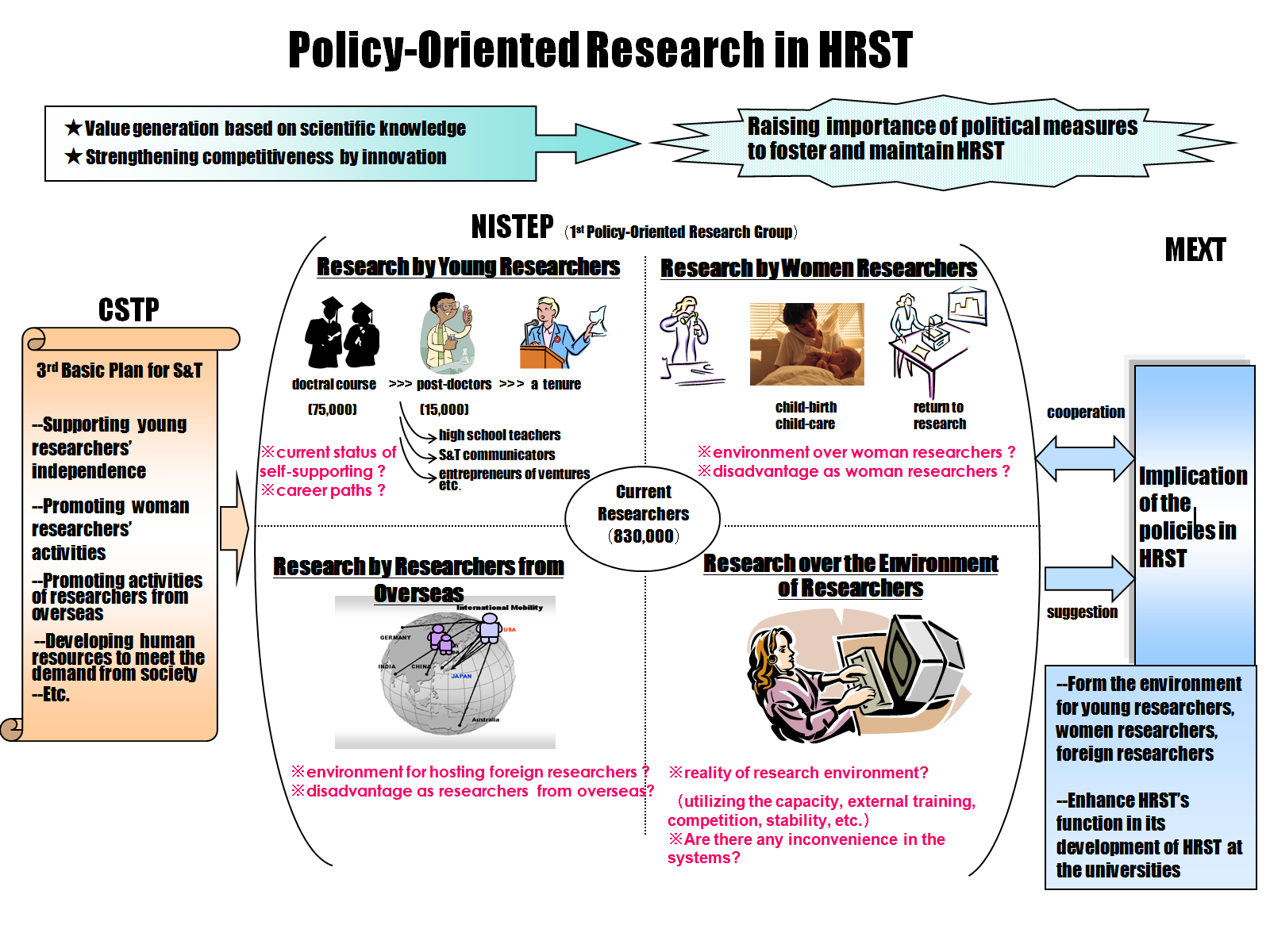
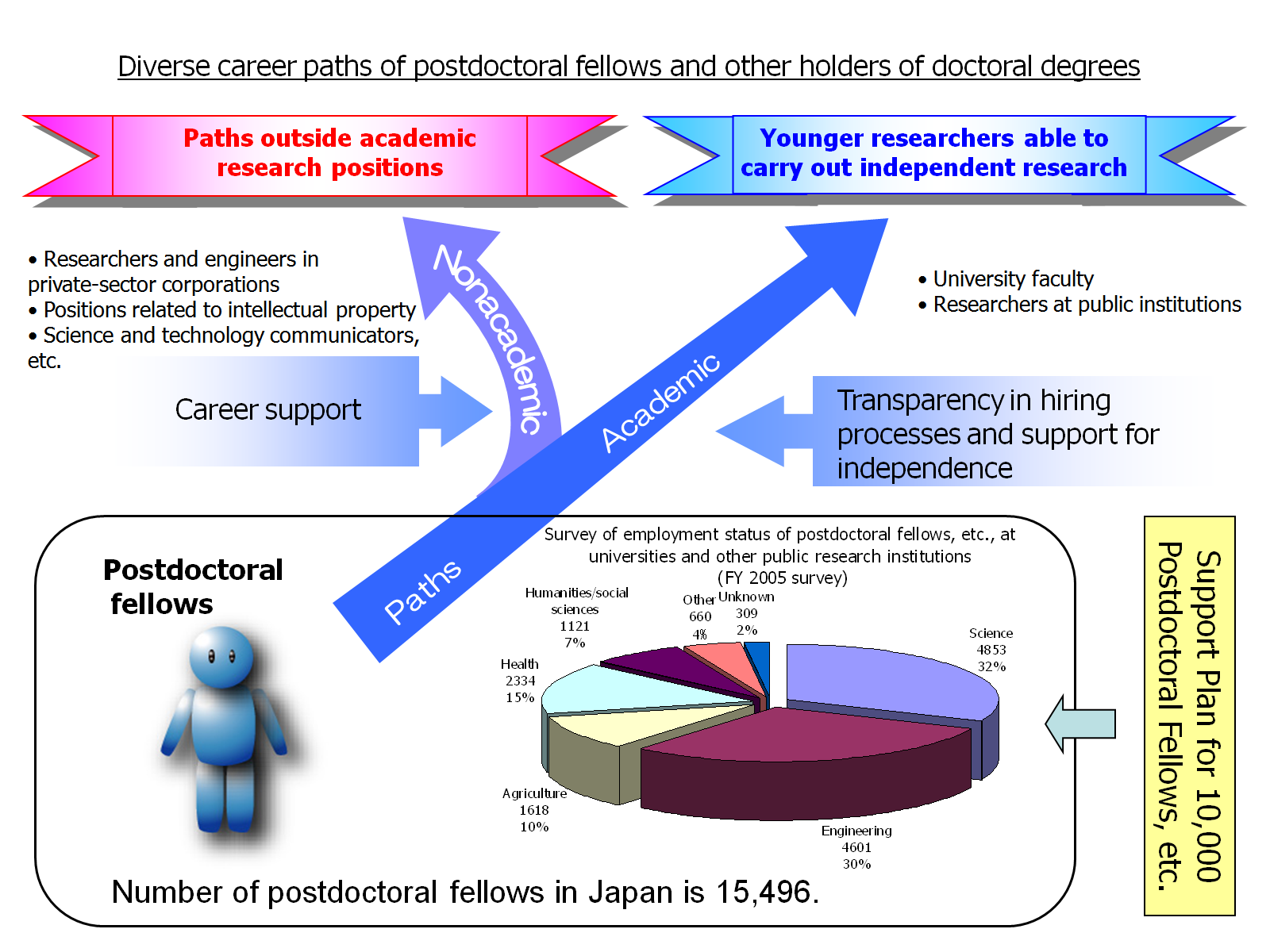
The process by which postdoctoral fellows and other younger researchers (postdocs) establish themselves as independent researchers in a competitive environment is important. Furthermore, policies to help postdocs flourish not only as university educators but also in various other fields in society are necessary. The 1st Policy-Oriented Research Group carries out surveys and research to grasp and analyze conditions from these points of views.
In concrete terms, the Group is working to quantitatively ascertain the number of postdoctoral fellows at universities and other research institutions and their employment status. Furthermore, because it has been pointed out that paths after postdoctoral fellowships are unclear, the Group is collaborating with some universities in an attempt to grasp trends in post-postdoc career paths.
In addition, the Third Science and Technology Basic Plan states the importance of promoting the careers of female researchers, but Japan ranks last among OECD member countries in the percentage of women in its research human resources. The 1st Policy-Oriented Research Group is therefore working to analyze the causes of the low percentage of female researchers, investigating bottlenecks on their career paths and so on.
Furthermore, in science and technology activities, it is important that outstanding research human resources are able to enter Japanese research society and flourish regardless of age or nationality. The Group is therefore working to ascertain and analyze the status of foreign researchers in Japan and the conditions necessary to encourage their success.